Charms, pins, buttons and keychains can work well as small purchases, but they create a simple problem: they are tiny, numerous, easy to move and sometimes easy to steal. A good display should invite browsing without turning the table into a free-for-all.
Quick answer
To display charms, pins and keychains at Artist Alley, use a visible board or stand for samples, keep sellable stock in sorted bags or boxes, show prices and bundles clearly, keep tiny items within your view and prepare a fast way to find the reference the customer wants.
In this guide
- Quick answer
- Show designs without leaving everything loose
- Make prices and bundles immediate
- Keep stock easy to find
- Limit theft risk
- Transport without tangles
- Common mistakes
- Final checklist
- Useful gear to compare
- FAQ
- Should customers pick up keychains themselves?
- How should I show charm or pin bundles?
- How do I avoid wasting time finding a design?
- What display works for pins?
- Read next
Show designs without leaving everything loose
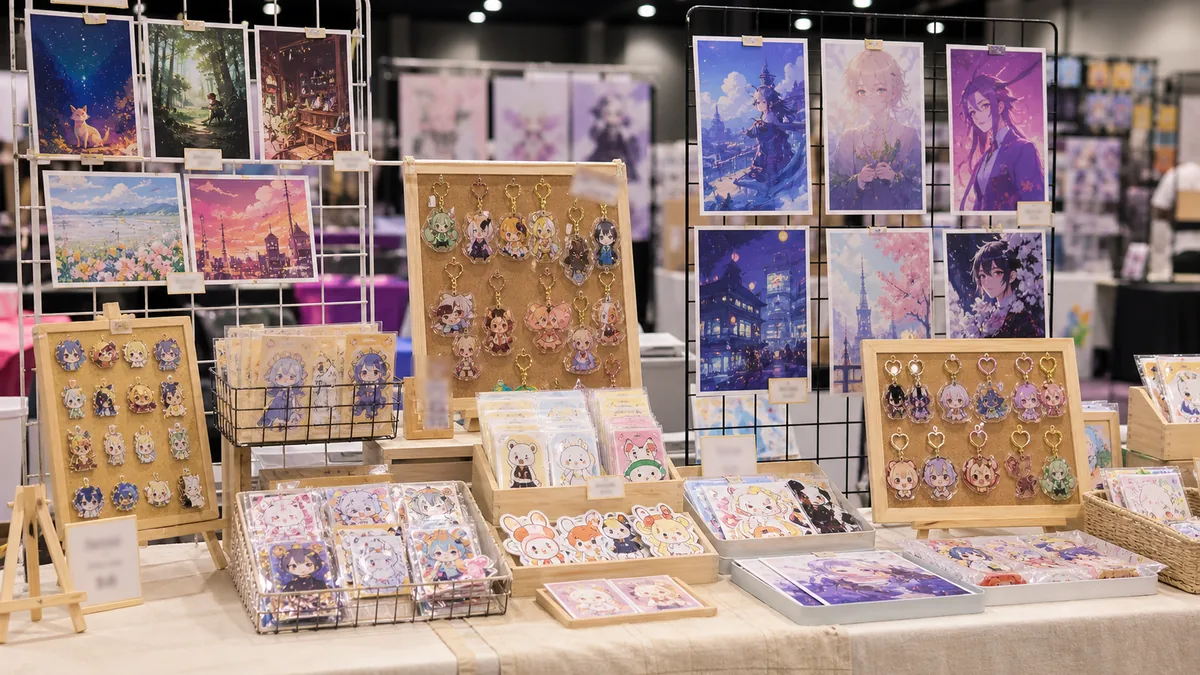
The board helps customers choose. Clean sellable stock can stay in a box behind or under the table.
- Samples displayed on a board
- Sellable stock separated
- References numbered if needed
- Keychains hung by range
- Pins fixed to a stable surface
Make prices and bundles immediate
Small merch often sells in bundles. A clear rule helps customers decide faster.
- Single price visible
- Bundle explained in one line
- Offers by product type
- No hidden tiny conditions
- Price sign near the board
Keep stock easy to find
If every charm is in one shared box, each sale becomes a search. Sort before the convention.
- Box by collection
- Bags by design
- Label or number on stock
- Best-selling restock within reach
- Fast count after each day
Limit theft risk
Tiny items should stay visible to you. The goal is not making the table unfriendly, but reducing blind spots.
- Products close to vendor side
- Boards angled toward you
- No deep bowl on the edge
- Higher-value pieces by request
- Helper useful during rush hours
Transport without tangles
Keychains and charms catch on each other. Storage should protect the hardware as much as the artwork.
- Individual bags when needed
- Compartment boxes
- Backing board for pins
- Flat stock during travel
- Return crate for handled items
Common mistakes
These mistakes waste time and make the table harder to watch.
- Putting everything in one basket
- Not showing prices
- Leaving higher-value pieces at the edge
- Mixing charms, pins and stickers
- Not testing the board with real attachments
Final checklist
Before opening, check whether you can find one design in ten seconds without leaving your chair.
- Designs visible
- Prices and bundles clear
- Stock sorted
- Tiny items easy to monitor
- Bags ready
- Display board stable
Useful gear to compare
These links help compare useful gear categories. Check dimensions, weight, stability and packed size first.
| Need | Useful search | Check |
|---|---|---|
| Visible keychains | look for keychain display stands for Artist Alley | Stability, height, capacity and transport. |
| Organized pins | compare pin display boards for Artist Alley | Size, pin hold, weight and attachment. |
| Protected stock | look for self sealing cello bags for charms | Size, closure, clarity and packed volume. |
| Sorting | compare compartment boxes for pins and buttons | Compartments, lid, height and fast access. |
| Small merch on table | search for tabletop stands for pins and keychains | Base, angle, capacity and visibility. |
FAQ
Should customers pick up keychains themselves?
You can allow it if the stock is low-risk and easy to watch. For many tiny or higher-value products, display samples and hand over clean stock yourself.
How should I show charm or pin bundles?
Place a short rule near the board: single price, bundle price and included products. Avoid long conditions.
How do I avoid wasting time finding a design?
Number designs or sort bags in the same order as the display board. Storage should follow the display.
What display works for pins?
Cork board, stretched fabric or foam board can work if the pins hold securely and the board stays stable with the real products.