Covering a booth overnight mainly reduces curiosity, dust, casual handling and small accidents. It is not real protection for valuables. A good system covers what can stay, but also forces you to remove what should not sleep at the booth.
Quick answer
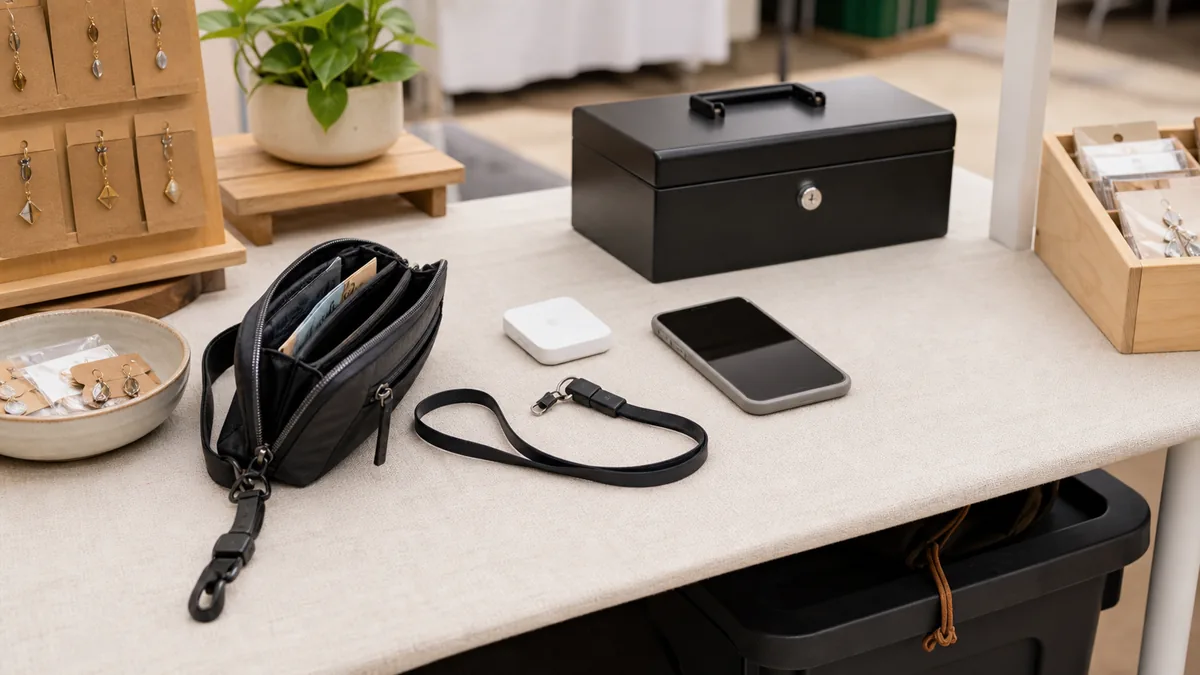
To cover a vendor booth overnight without leaving valuables, remove cash, card reader, phone, documents and high-value small products, lay down or stabilize fragile displays, close stock bins, then cover the table with a sheet, cover or tarp suited to the venue. Outdoors, add weights, ties and protection against rain and wind.
In this guide
- Quick answer
- Remove valuables before covering
- Stabilize before adding fabric
- Choose the cover by venue
- Do not make reopening painful
- Stay discreet without blocking aisles
- Common mistakes
- Covering checklist
- Useful gear to compare
- FAQ
- Is a sheet enough to cover a booth overnight?
- Can products stay under the cover?
- How do I avoid knocking everything over while covering?
- Should I photograph the covered booth?
- Read next
Remove valuables before covering
The first covering step is removing sensitive items. A tarp should not become a hiding place for what you cannot afford to lose.
- Cash and reader with you
- Phone and tablet taken away
- Jewelry and one-off pieces removed
- Documents and receipts packed
- Pocket-sized valuables off the booth
Stabilize before adding fabric
Pulling a sheet over an unstable display can cause more damage than the night itself.
- Tall displays laid down or moved back
- Fragile items put into bins
- Grids and fixtures secured
- Lights unplugged and packed
- Nothing catching inside the fabric
Choose the cover by venue
Indoors, the goal is mostly hiding and dust protection. Outdoors, the cover also needs to handle wind and rain.
- Indoor: clean sheet or wide tablecloth
- Convention: cover that removes quickly in the morning
- Covered outdoor: light tarp attached properly
- Open outdoor: canopy walls, grommet tarp and weights
- Uncertain weather: no exposed paper goods
Do not make reopening painful
The cover should come off quickly without knocking the booth over. Otherwise, the problem just moved to the next morning.
- Fast ties that are easy to remove
- Reopening bin accessible
- Key prices and signs laid flat
- Photo of the table before covering
- Separate bag for damp or dirty fabric
Stay discreet without blocking aisles
A covered booth should not spill into the aisle, hide safety signage or bother the neighboring vendor.
- No tie on forbidden structures
- No tarp hanging into walkways
- No powered cable hidden under fabric
- No unstable weight near an edge
- Neighbor access respected
Common mistakes
These mistakes happen at closing time, when everyone is tired.
- Covering before checking what is underneath
- Pulling fabric across hooks
- Leaving a battery plugged in under fabric
- Using a noisy tarp indoors
- Packing a wet cover with products
Covering checklist
Run this list in order, then take a quick photo before leaving.
- Valuables removed
- Fragile displays laid down
- Bins closed
- Cover fixed without too much tension
- Nothing spills into the aisle
- Photo taken before leaving
Useful gear to compare
These links help compare useful gear categories. Check dimensions, weight, stability and packed size first.
| Need | Useful search | Check |
|---|---|---|
| Simple indoor cover | look for fitted sheets for vendor tables | Size, hold, opacity and washing. |
| Outdoor protection | compare tarps with grommets for canopies | Dimensions, grommets, thickness and folding. |
| Fabric hold | look for tablecloth clips for vendor booths | Table fit, grip, marks on fabric and transport. |
| Fast ties | search for reusable cable ties for booths | Length, reuse, tightening and fast removal. |
| Stable canopy | compare canopy weights for vendor booths | Weight, attachment, transport and event rules. |
FAQ
Is a sheet enough to cover a booth overnight?
Indoors, often yes if the goal is hiding and dust protection. Outdoors, you need to think about wind, rain, ties and weights.
Can products stay under the cover?
Only low-risk products that are allowed by the organizer and stored out of sight. Valuable, small, one-off or electronic items should go with you.
How do I avoid knocking everything over while covering?
Lay down tall displays, remove fragile items, check hooks and place the fabric without pulling hard. Test the cover at home if the booth is complex.
Should I photograph the covered booth?
Yes. A photo helps you check the booth state, notice missing items the next morning and document an issue if needed.