Running a vendor booth alone is possible, but it is not only about pushing through. You need to set up, sell, take payments, eat, use the bathroom, watch stock and pack down without putting yourself in a fragile situation.
Quick answer
To run a vendor booth alone all day, reduce the setup to what you can build without help, keep payment and sensitive items on you, plan short breaks with a neighbor or be-right-back sign, sort stock by priority and prepare water, food and seating before you are tired.
In this guide
- Quick answer
- Limit the setup to what you can carry
- Keep sensitive items on you
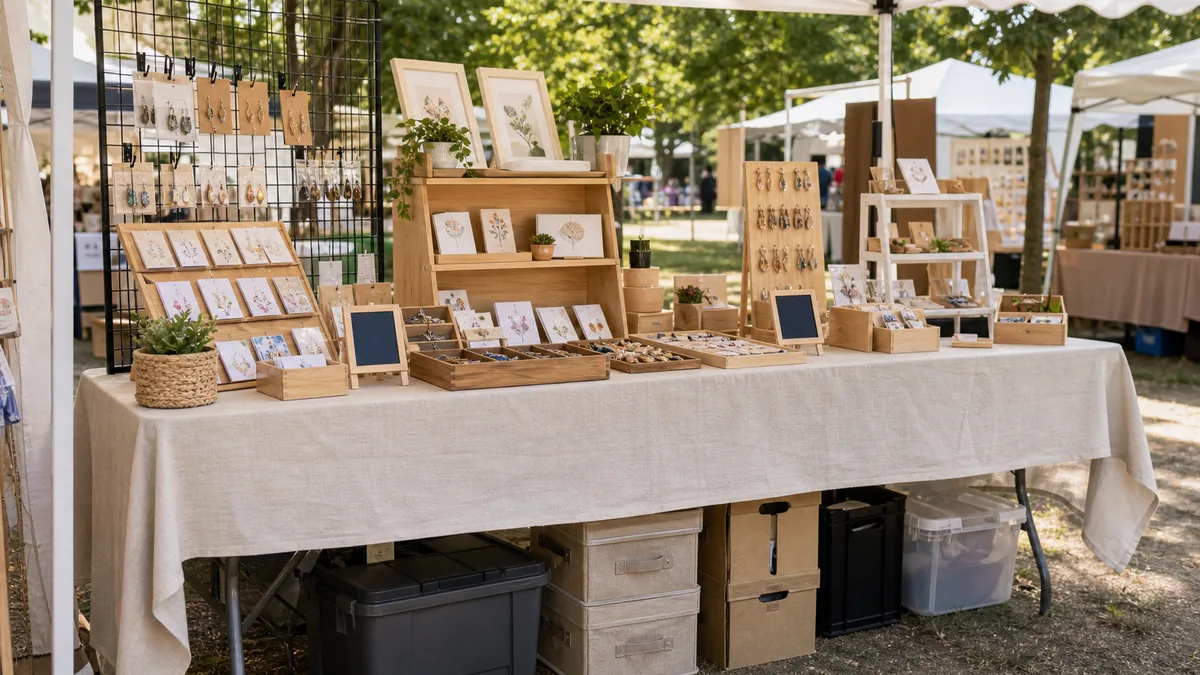
- Set the table to sell without running around
- Plan fatigue, food and breaks
- Know when not to do it alone
- Useful gear to compare
- FAQ
- Can I run a booth alone all day?
- How do I use the bathroom when vending alone?
- Do I need to stand all day?
- What is the biggest solo booth risk?
- Read next
Limit the setup to what you can carry
The first solo risk is planning a booth you cannot set up or pack down cleanly without help.
- Table only if provided or light enough
- Crates you can carry when full
- Stable displays that set up fast
- No long structure without a full test
- Simple load order for the return trip
Keep sensitive items on you
When you are alone, you cannot watch every corner. Cash, card reader, phone and documents should be easy to take with you.
- Cash and reader in a worn pouch
- Charged phone within reach
- Documents in a closed folder
- Higher value stock away from table edges
- One clear checkout point
Set the table to sell without running around
The booth should still work when several customers browse at once. Best sellers, prices and packaging should be reachable without searching.
- Best sellers in the center
- Prices visible without asking
- Customer bags near checkout
- Restock under the table on vendor side
- Only one crate open at a time
Plan fatigue, food and breaks
Fatigue hurts your welcome, awareness and checkout accuracy. Physical preparation is part of the booth.
- Water within reach
- Snack that does not dirty your hands
- Short seating during quiet moments
- Bathroom break before it becomes urgent
- Layer for cold or warm halls
Know when not to do it alone
Some events are not good solo candidates: too long, too heavy, too far away, too much stock or too much customer handling.
- Setup impossible alone
- Multi-day event with no break plan
- Expensive small products
- Constant live demo needed
- Far parking with many trips
Useful gear to compare
These links help compare useful gear categories. Check dimensions, weight, stability and packed size first.
| Need | Useful search | Check |
|---|---|---|
| Short seating | look for folding stools for vendor booths | Height, stability, weight and packed size. |
| Hydration | compare insulated water bottles for events | Capacity, opening, leaks and cleaning. |
| Cash on body | look for waist packs for vendor cash | Compartments, closure, discreet look and comfort. |
| Reachable storage | compare under-table organizers for booths | Access, attachment, volume and fast pack-down. |
| Standing comfort | compare anti-fatigue mats for vendor booths | Thickness, transport, cleaning and event rules. |
FAQ
Can I run a booth alone all day?
Yes if the setup is light, stock is organized, payment is simple and breaks are planned. If setup or watching the booth depends on help, simplify or bring someone.
How do I use the bathroom when vending alone?
Plan a short break, ask a neighbor or organizer whether brief watch is possible, take cash and card reader with you, then leave a clear return sign.
Do I need to stand all day?
No. Stand when customers arrive and sit briefly during quiet moments. A low chair or folding stool can help without hurting the welcome.
What is the biggest solo booth risk?
The combination of fatigue, stock searching, improvised payment and unplanned breaks. The booth should be arranged to reduce those moments.