Apparel takes a lot of space for very few visible products. A table of t-shirts or tote bags can become a pile in minutes if sizes, colors, designs and restock are not separated.
Quick answer
To sell apparel at a booth, show one or two strong samples, sort stock by size in labeled bins or stacks, keep a folding area, show available sizes without making customers open every pile, and choose between rack, folded table or bins depending on allowed space.
In this guide
- Quick answer
- Choose what needs to be visible
- Rack or folded table
- Sort sizes without wasting time
- Handle try-on questions
- Keep a folding zone
- Common mistakes
- Final checklist
- Useful gear to compare
- FAQ
- Do I need a rack to sell t-shirts?
- How do I stop folded piles from getting destroyed?
- How should I show available sizes?
- Where should apparel stock go?
- Read next
Choose what needs to be visible
You do not need to show every size of every design. Visitors need to see the design, then understand how to ask for their size.
- One visible sample per strong design
- Available sizes shown clearly
- Colors separated if they change the design
- Best sellers in front
- Full stock away from customer browsing
Rack or folded table
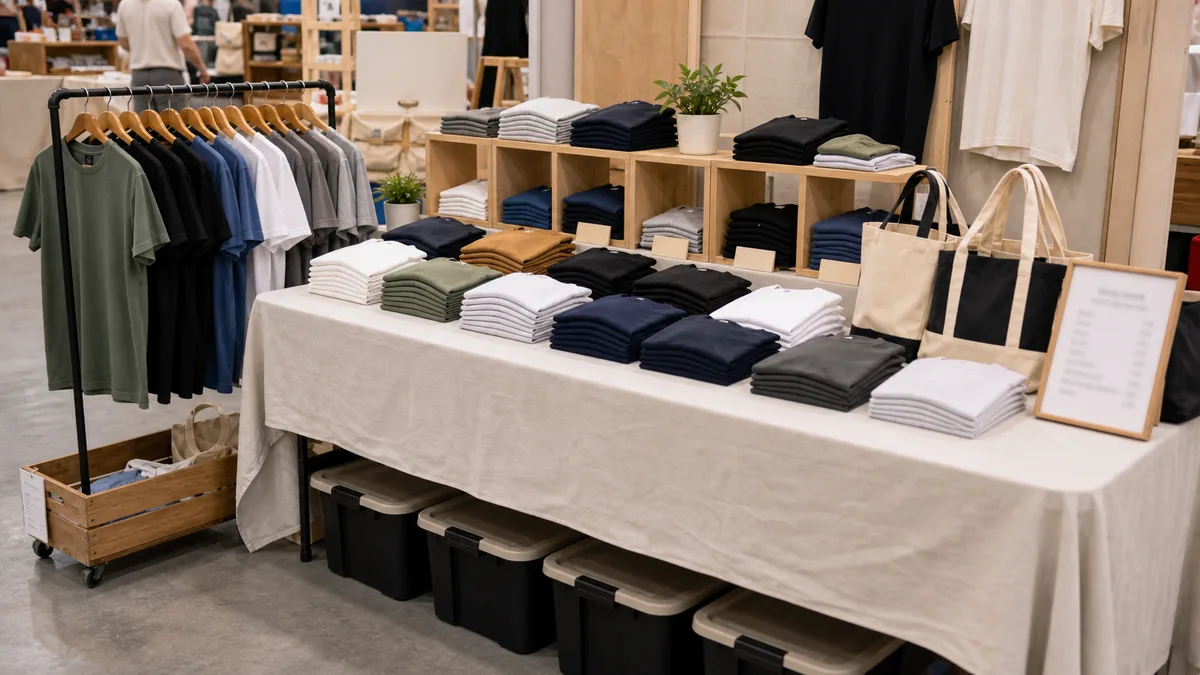
A rack shows designs quickly, but takes space and may leave your booth footprint. A folded table is compact, but needs more upkeep.
- Rack if height is allowed
- Folded table for small spaces
- Tote bags hung or stacked cleanly
- Nothing sticking into the aisle
- Backup table plan if rack is refused
Sort sizes without wasting time
The real apparel problem is often restocking. A missing size can lose a sale even if the shirt is inside a crate.
- Bins by size
- Labels visible on the vendor side
- Stacks not too tall
- Colors separated within each size
- Quick count of low sizes
Handle try-on questions
Not every event allows try-ons. Decide before the event how you answer size questions.
- Simple size guide
- Sample garment if useful
- No handled item back into clean stock unchecked
- Mirror only if useful and stable
- Clear rule for orders or exchanges
Keep a folding zone
If you fold on top of products, the table breaks down fast. One small clear area keeps the booth cleaner.
- Empty surface near checkout
- Customer bags ready
- Folding board if volume is high
- Return pile for handled items
- Clean stock separated from tried-on apparel
Common mistakes
These mistakes create volume, but not readability.
- Displaying too many sizes at once
- Mixing S, M and L in one bin
- Putting the rack in the aisle
- Forgetting a size guide
- Not refolding during quiet moments
Final checklist
Before opening, simulate one sale: the customer sees the design, asks for a size, you find it, fold it and take payment.
- Designs visible
- Sizes readable
- Stock by size
- Folding zone clear
- Bags nearby
- Transport tested with folded apparel
Useful gear to compare
These links help compare useful gear categories. Check dimensions, weight, stability and packed size first.
| Need | Useful search | Check |
|---|---|---|
| Hanging apparel | compare folding garment racks for vendor booths | Width, stability, height and transport. |
| Readable sizes | look for clothing size dividers for racks | Format, readability, strength and fit. |
| Sorted stock | compare storage bins for t-shirts at craft fairs | Size, lid, stacking and weight. |
| Fast folding | compare t-shirt folding boards | Size, speed, footprint and real usefulness. |
| Takeaway bags | look for retail paper bags for clothing | Size, handles, strength and packed volume. |
FAQ
Do I need a rack to sell t-shirts?
Not always. A rack helps if you have space and height permission. On a small table, one visible sample plus size-sorted stacks can be simpler.
How do I stop folded piles from getting destroyed?
Limit visible pieces, keep a return pile for handled items and refold during quiet moments. Sizes should be separated.
How should I show available sizes?
Use a small card by design or bin: available sizes, colors and sold-out notes if needed. Customers should not open every pile to check.
Where should apparel stock go?
Under the table or behind the rack, sorted by size and color. Full stock should not become the main display.